
 By
By 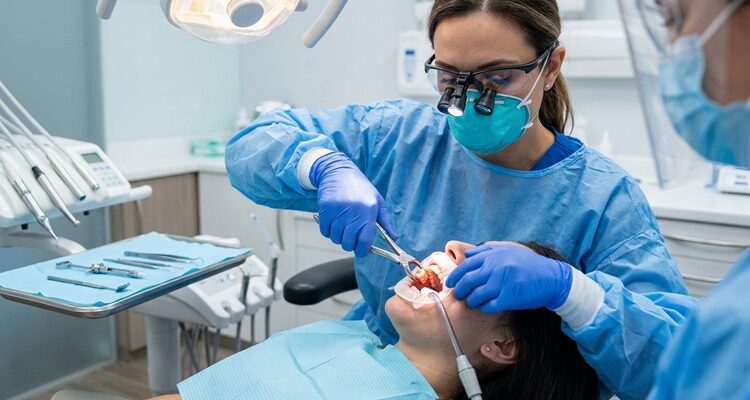
A bright, luminous smile is universally recognized as a hallmark of vitality, health, and confidence. In a global cosmetic and medical hub, patients seeking to enhance their smile have access to the most sophisticated treatments available, with professional teeth whitening in dubai setting a benchmark for safety and efficacy.
However, many consumers view teeth whitening as a surface-level cosmetic enhancement akin to a facial or a manicure. In reality, medical-grade teeth whitening is a precise chemical process rooted in structural oxidation and cellular biology. Understanding the underlying science of stain lifting helps patients make informed decisions and know exactly what to expect when they step into a premium dental clinic near me.
Table of Contents
Understanding the Anatomy of a Dental Stain
To understand how a medical-grade system lifts a stain, one must first understand how teeth discolor. Human enamel is composed of a highly mineralized crystalline matrix of hydroxyapatite. Though it appears completely solid to the naked eye, enamel is actually porous, covered in microscopic pathways known as enamel tubules that extend inward toward the sensitive, living dentin layer.
Dental discoloration is clinically categorized into two distinct types:
1. Extrinsic Staining
These are surface-level stains embedded within the pellicle (the thin protein film that forms on enamel). They are caused by the accumulation of dark macromolecules called chromogens, which are highly prevalent in substances like coffee, black tea, red wine, and tobacco. Routine brushing or basic scaling at a local dental facility can diminish extrinsic stains, but it cannot alter the baseline shade of the tooth.
2. Intrinsic Staining
Intrinsic staining occurs when chromogenic molecules slip through the enamel pores and become deeply embedded within the internal crystalline structure of the tooth and the underlying dentin. This can happen due to natural aging (as enamel thins and the naturally yellow dentin becomes more visible), childhood antibiotic exposure (such as tetracycline), or excessive fluoride intake. Intrinsic stains are entirely locked away from toothpaste or physical abrasives; lifting them requires chemical penetration.
⚡ The Chemical Mechanism of Medical-Grade Stain Lifting
When you visit an accredited dental clinic near me for teeth whitening, the entire procedure revolves around a highly controlled chemical reaction: oxidation.
Professional whitening systems utilize high-concentration hydrogen peroxide ($H_2O_2$) or carbamide peroxide compounds, typically ranging from 25% to 40% potency. When applied to the tooth surface, these unstable medical compounds easily pass through the enamel pores into the tubules.
Once inside, the peroxide breaks down, releasing highly reactive free oxygen radicals. These radicals actively seek out the large, complex carbon-ring molecules that form dark pigments. The oxygen radicals break the chemical double-bonds holding the stain molecules together, fragmenting them into much smaller, colorless chains. By transforming these chromogens into simple structures, light can pass through the enamel matrix unhindered, causing the teeth to appear intensely white and reflective.
🚀 The Multi-Step Patient Experience: What to Expect In-Office
A standard chairside medical whitening appointment is meticulously scheduled to maximize stain lifting while protecting the delicate living tissues of the mouth.
Step 1: The Prophylactic Preparation
Before any bleaching agent is applied, a dental hygienist performs a thorough scaling and polishing. Removing plaque and tartar is essential; otherwise, these organic barriers will block the whitening gel from contacting the enamel uniformly, resulting in an uneven, splotchy result.
Step 2: Gingival Barrier Isolation
Because medical-grade peroxide is highly acidic and corrosive to soft tissue, complete isolation is required. The clinician places a specialized cheek retractor and applies a liquid, light-curing plastic resin dam along the margins of the gums. Once hardened under a UV light, this barrier completely seals the soft mucosal tissues away from the whitening gel, eliminating the risk of chemical burns or gum irritation.
Step 3: Gel Application and Photo-Activation
The potent whitening gel is carefully painted onto the visible teeth. To accelerate the chemical oxidation process, a specialized blue LED or laser light spectrum is positioned over the patient’s smile. The energy from this light warms the gel slightly, causing the peroxide to decompose and release oxygen radicals at a highly accelerated rate. This allows deep intrinsic stains to be broken down in a fraction of the time required by passive home kits.
Step 4: The Multi-Cycle Reset
The gel is typically left on the teeth for 15 minutes before being suctioned off and replaced with a fresh layer. This process is repeated 3 to 4 times within a single hour-long appointment. This step-by-step approach prevents the tooth’s internal nerve (the pulp) from overheating while achieving maximum, uniform shade alteration.
📊 Commercial At-Home Kits vs. Medical-Grade Office Systems
| Clinical Evaluation Metric | Over-the-Counter Trays & Strips | In-Office Medical Whitening |
| Active Peroxide Concentration | Low ($3\% \text{ to } 6\%$) | High ($25\% \text{ to } 40\%$) |
| Enamel Penetration Depth | Surface-level (Extrinsic only) | Deep Structural (Intrinsic & Dentin) |
| Soft-Tissue Shielding | None (High risk of gum irritation) | Complete (Light-cured gingival dam) |
| Shade Improvement Range | 1–2 shades over several weeks | 6–8 shades in a single 60-minute session |
| Sensitivity Mitigation | Unmanaged | Immediate (In-office desensitizers) |
🧠 Managing Post-Treatment Sensitivities Proactively
The primary side effect of advanced dental bleaching is short-term dentin hypersensitivity, often described by patients as minor, sudden nerve “flashes.” This occurs because the rapid oxidation process temporarily clears away the micro-crystalline plugs within the enamel tubules, leaving the microscopic nerve paths open to temperature changes.
At a premier local dental clinic, this phase is managed seamlessly. Immediately following the removal of the whitening gel, the dentist applies a concentrated calcium phosphate and potassium nitrate varnish. This compound acts as an instant shield, soothing the internal nerves and kickstarting the remineralization of the enamel. Over the following 48 hours, saliva naturally replenishes the tooth’s minerals, closing the pores and eliminating sensitivity completely.
🏆 Conclusion: The Safe Path to Luminescent Smiles
The true beauty of medical-grade teeth whitening in dubai lies in its perfect balance of advanced chemical engineering and patient safety. While supermarket strips and unmonitored home gels promise cheap convenience, they lack the clinical strength required to dissolve deep intrinsic staining and carry a high risk of enamel erosion and soft-tissue injury.
By trusting your cosmetic transformation to an advanced dental clinic near me, you ensure that your journey to a brighter smile is guided by diagnostic precision, state-of-the-art technology, and professional oversight. Ultimately, a medical-grade treatment does more than just mask discoloration—it systematically breaks down stains at a molecular level, delivering a healthy, radiant, and radiant smile that lasts.












Comments